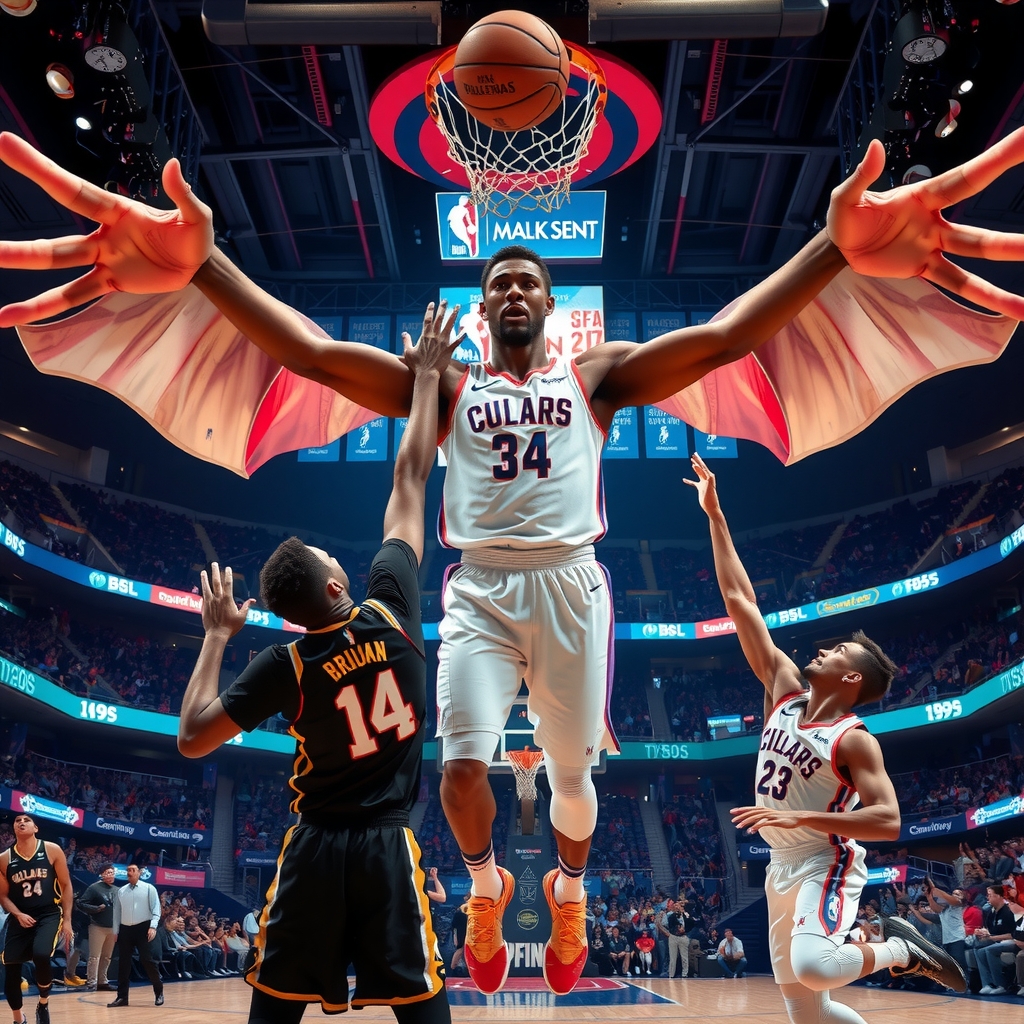
Giannis Antetokounmpo
From selling trinkets on the streets of Athens to winning the NBA Finals MVP — the Greek Freak's physical transformation is unlike anything the league has ever seen.
Origin Story
Athlete Bio & Rise to Fame
Born in Athens, Greece in 1994 to Nigerian immigrant parents, Giannis Alexandros Antetokounmpo grew up in poverty with four brothers sharing one passport between them. His parents Charles and Veronica sold watches and bags on the streets to survive. As a teenager, Giannis did the same, ducking from police while also trying to practice basketball.
Discovered at 17 by Milwaukee Bucks scouts, he arrived in the NBA in 2013 as a rail-thin 196-lb teenager who could barely speak English. What followed is one of the most extraordinary physical and athletic development arcs in professional sports history.
Today Giannis is a two-time MVP, NBA Champion, Finals MVP, and Defensive Player of the Year. His story is a masterclass in relentless growth, coachability, and belief — one that resonates far beyond basketball. Learn how other elite athletes share that same hunger on our Athletes hub.
- 1994
Born in Athens, Greece to Nigerian parents
- 2011
Joins Filathlitikos BC; first organized basketball
- 2013
Drafted 15th overall by the Milwaukee Bucks at 18
- 2017
Named to first All-Star team; Bucks' franchise cornerstone
- 2019–20
Back-to-back NBA MVP; leads league in scoring
- 2021
NBA Champion & Finals MVP — 50 points in Game 6
- 2023
Becomes Bucks' all-time leading scorer
The Body Built Over a Decade
Physical Development Story
When Giannis arrived in Milwaukee, coaches noted he was physically immature — long and lean, with a 7'3" wingspan on a frame that weighed under 200 lbs. The Bucks' strength staff designed a multi-year program specifically around his unique proportions. The goal was never to make him bigger for its own sake — it was to make him functional at scale.
Year 1–3: Foundation
Basic compound lifting — squats, deadlifts, RDLs — to build structural integrity in his joints. Long limbs generate enormous leverage forces; stability had to come before strength. Weight went from 196 to 220 lbs over three seasons, almost entirely muscle.
Year 4–6: Power Phase
Olympic-lift derivatives (hang cleans, trap bar jumps) developed the hip explosion that powers his unique first step. His vertical leap improved measurably as a result of targeted posterior chain work, not genetics alone.
Year 7–9: Functional Mass
Upper body hypertrophy to withstand contact in the paint. Shoulder and chest work allowed him to absorb fouls at the rim and finish through traffic — turning him from a finesse driver into an unstoppable battering ram.
Year 10+: Longevity Focus
Soft-tissue prehab, eccentric loading, and thoracic mobility became priorities as mileage accumulated. Compare this approach with LeBron's recovery protocol — both men treat longevity as a competitive advantage.
The Unstoppable Drive
Drive & Finishing Drills
Giannis's drive to the basket is statistically the most efficient scoring action in modern NBA history at his volume. It's not accidental — it's the product of thousands of deliberate repetitions on very specific movement patterns. See the broader principle of deliberate practice over reps on our training science page.

Euro-Step Power Lane
Start at the 3-point arc. Drive hard in a straight line, plant at 12 feet, perform a two-step gather shifting laterally, and finish with either hand. 6 sets of 8 reps. Focus: balance through the gather, not speed.
Contact Finish Series
Partner applies hip contact as the driver reaches the painted area. Practice absorbing the foul without losing body control. Finish high off the backboard. Teaches the body to stay balanced under duress — Giannis shoots 73%+ at the rim under contact.
Giant Step Close-Out Attack
From the elbow, take 2 giant strides to the rim. Giannis covers the lane in literally two steps — longer than anyone in NBA history. Train this by counting strides, reducing them each week. Core stability is the limiter.
Mismatch Activation
Post up, get the ball 15 feet out, face up against a shorter defender, then drive baseline or middle. Teaches reading hip position and choosing the path of least resistance — the same cognitive read Curry uses off dribble handoffs.
Full-Speed Retreat Dribble
Drive, get cut off, reset dribble behind the arc without picking it up. Develops the composure Giannis has shown late in close games — his turnover rate drops in crunch time because of this exact drill type.
One-Dribble Pull-Up
From various catch positions, take one dribble and pull up at the free-throw line. Giannis added this to his game in 2019–20 to punish defenses that sagged. Build the mid-range before the 3 — rhythm shot, not a reach.
Polished Over Years
Post Game & Skill Work
Early in his career, Giannis had zero reliable post moves — teams simply doubled him and took the ball away. He spent off-seasons with coaches drilling footwork until his back-to-the-basket game became a legitimate threat. This mirrors the research-backed approach to skill acquisition: isolate a weakness, drill it to automaticity, then integrate it under pressure.
| Skill | Drill | Key Cue | Volume |
|---|---|---|---|
| Drop-step baseline | Catch at block, drop foot, power dunk | Stay low through the drop | 5×10 each side |
| Face-up spin | Catch at elbow, jab, explode spin to rim | Protect ball through rotation | 4×8 |
| Hook shot — both hands | Mikan drill variation, extend range weekly | Shoot with fingertips, not palm | 100 daily makes |
| Passing reads from post | 2-on-2 post entry with live defense | See cutter before double comes | 20 min live |
| Free throw ritual | Identical routine, 200 makes per session | Same arc, same depth every rep | Post-practice daily |
| Three-point catch & shoot | Corner catch off dribble hand-off | Set feet before the catch | 50 makes per zone |
Built for 36 Minutes at 100%
Athleticism & Conditioning
Giannis plays 34–38 minutes per game at near-maximum intensity, sprinting coast-to-coast, defending multiple positions, and absorbing collisions. This demands conditioning architecture that most big men never need. The Bucks use a sprint-first, condition-after model — something our training science page covers in depth: Sprint First, Condition After.
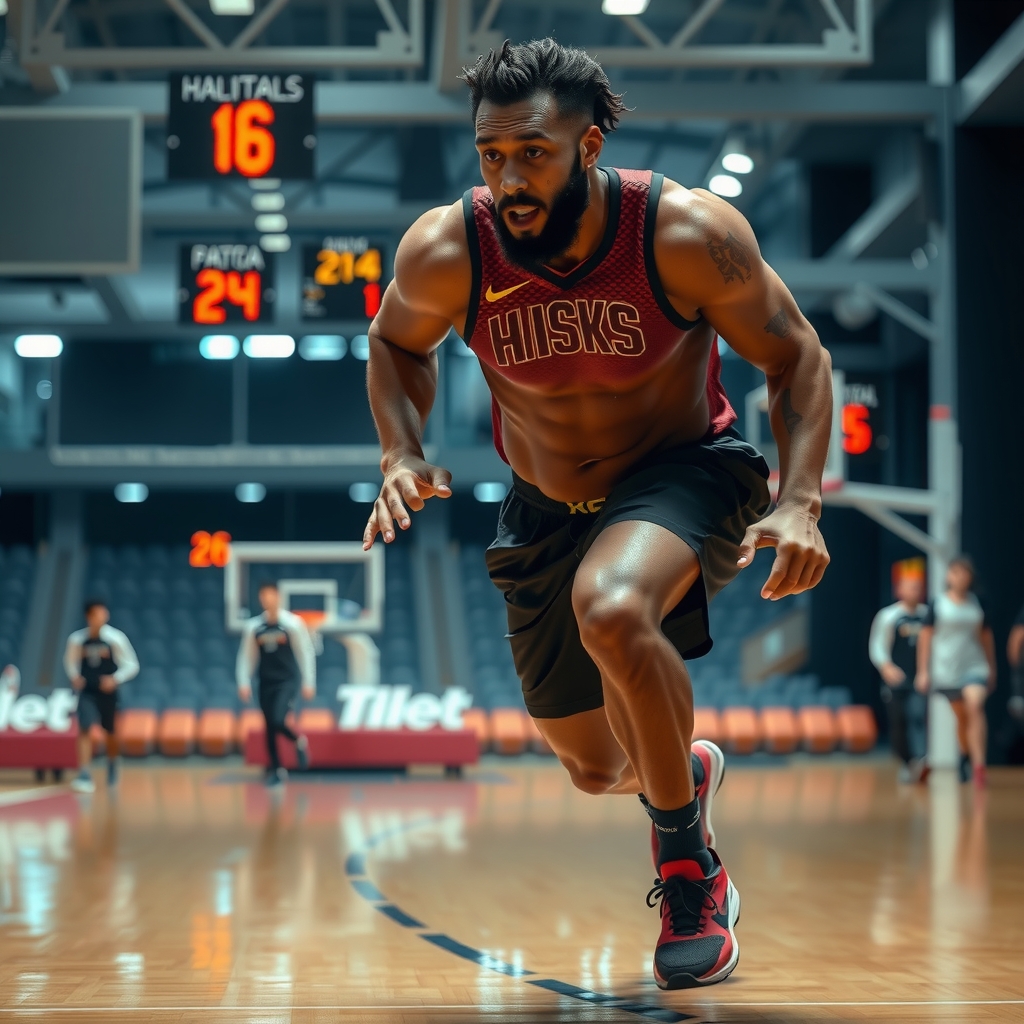
- Lane-to-lane suicide sprints (8 sets, full recovery) — trains the exact court distances Giannis covers on transition defense.
- Sled pushes at 135% bodyweight — builds the quad drive that generates his first-step explosion without ballistic joint stress.
- Reactive agility ladders — footwork speed for lateral closeouts; Giannis defends 1–5 and must shift movement patterns instantly.
- VO2 max intervals — 30s all-out bike, 90s active recovery × 10 — elevates his lactate threshold to maintain sprint quality in the 4th quarter.
- Jump training: depth drops + box jumps pre-practice — keeps his vertical and landing mechanics sharp under accumulated fatigue.
- Grip and upper body pulling work — helps him hold position in the post and win rebounding battles against heavier centers.
- See how pros structure their weekly load to understand how this fits a 7-day cycle.
Fueling A Freak of Nature
Diet & Recovery
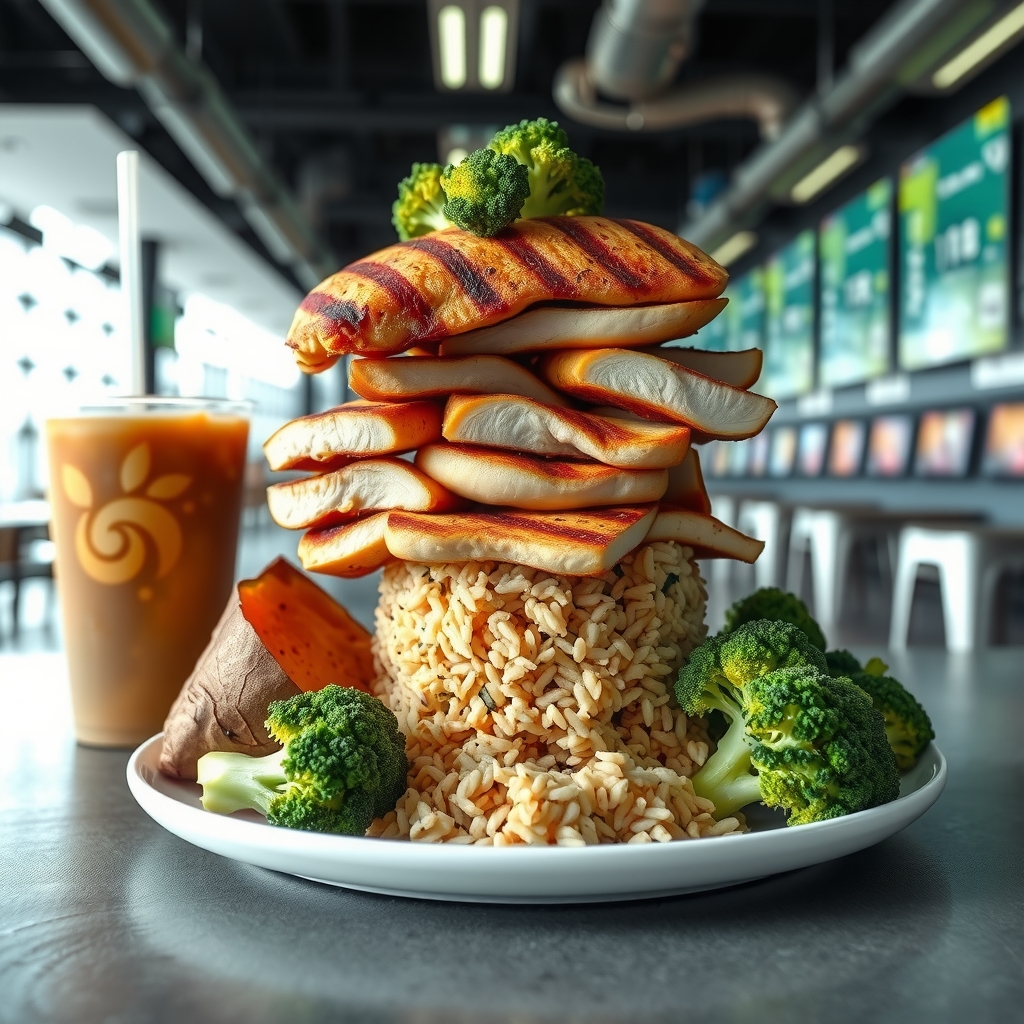
At 242 lbs of functional muscle, Giannis's caloric and protein needs dwarf those of most athletes. He reportedly consumes in the range of 3,500–4,500 calories per day depending on game load, with a heavy emphasis on lean protein, complex carbohydrates, and hydration. His Greek heritage influences his diet — olive oil, lean meats, legumes, and fresh vegetables form the base.
Recovery is treated as training. Giannis reportedly uses cold-water immersion post-game, compression, and prioritizes sleep above all other recovery modalities. Compare this to LeBron's sleep and recovery protocol — both elite NBA players make sleep the non-negotiable first pillar. For the science, read our explainer on why sleep is your secret weapon.
Train Like The Greek Freak
Giannis didn't inherit greatness — he constructed it, season by season, rep by rep. Now it's your turn to build something unstoppable.