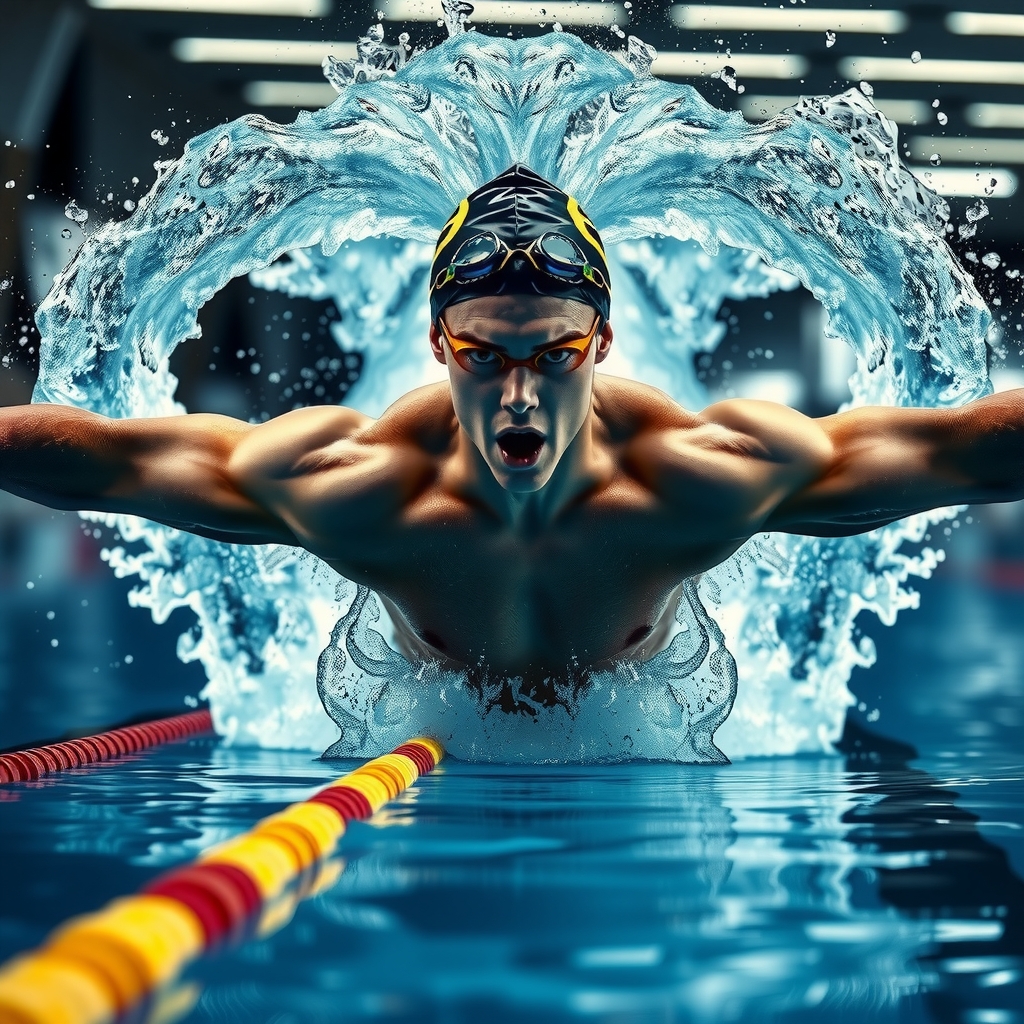
MichaelPhelps
23 gold medals. 80,000 metres a week. 10,000 calories a day. Discover the brutal, research-backed system behind history's most decorated Olympian.
Athlete Profile
Athlete Bio & Records
Born June 30, 1985, in Baltimore, Maryland, Michael Fred Phelps II began swimming at age 7. Coached by Bob Bowman from age 11, Phelps made his first Olympic team at 15 — and never stopped rewriting the record books. His career spanned four Olympics (Sydney 2000 through Rio 2016).
At 6'4" with a 6'7" wingspan, size 14 shoes, double-jointed ankles, and a torso-to-leg ratio built for hydrodynamics, Phelps is often described as having a body genetically optimised for swimming. But his coach Bob Bowman has consistently emphasised that talent without obsessive preparation produces nothing. See how Caeleb Dressel built on that legacy →
"There will be obstacles. There will be doubters. There will be mistakes. But with hard work, there are no limits."
— Michael PhelpsCareer Highlights
- 23 Olympic gold medals — all-time record (2000–2016)
- 28 total Olympic medals (most in Olympic history)
- World record: 100m butterfly — 49.82s (Beijing 2008)
- World record: 200m butterfly — 1:52.03 (Beijing 2008)
- World record: 200m individual medley — 1:54.23 (Beijing 2008)
- World record: 400m individual medley — 4:03.84 (Beijing 2008)
- 8 gold medals in a single Games (Beijing 2008)
- AP Male Athlete of the Year — 6 times
The Grind
Training Volume & Schedule
At peak preparation, Phelps trained twice daily, six to seven days per week — with zero days off for years. His coach Bob Bowman structured a 365-day programme, deliberately training on Christmas Day and birthdays to build a psychological edge: while rivals rested, Phelps accumulated thousands of extra metres. Weekly swim volume reached 80,000 metres (50 miles) during heavy blocks — the equivalent of swimming the English Channel more than once per week.
PM: 2nd pool + dryland, 2–3 hrs
Focus: race simulation sets
Light dryland mobility
Technique refinement focus
Race-pace sharpening only
+ 6–8 hrs dryland / week
This volume-first approach aligns with what sports scientists call deliberate overreaching — structured overload followed by taper to create supercompensation. See how elite athletes structure their yearly cycle →
In The Water
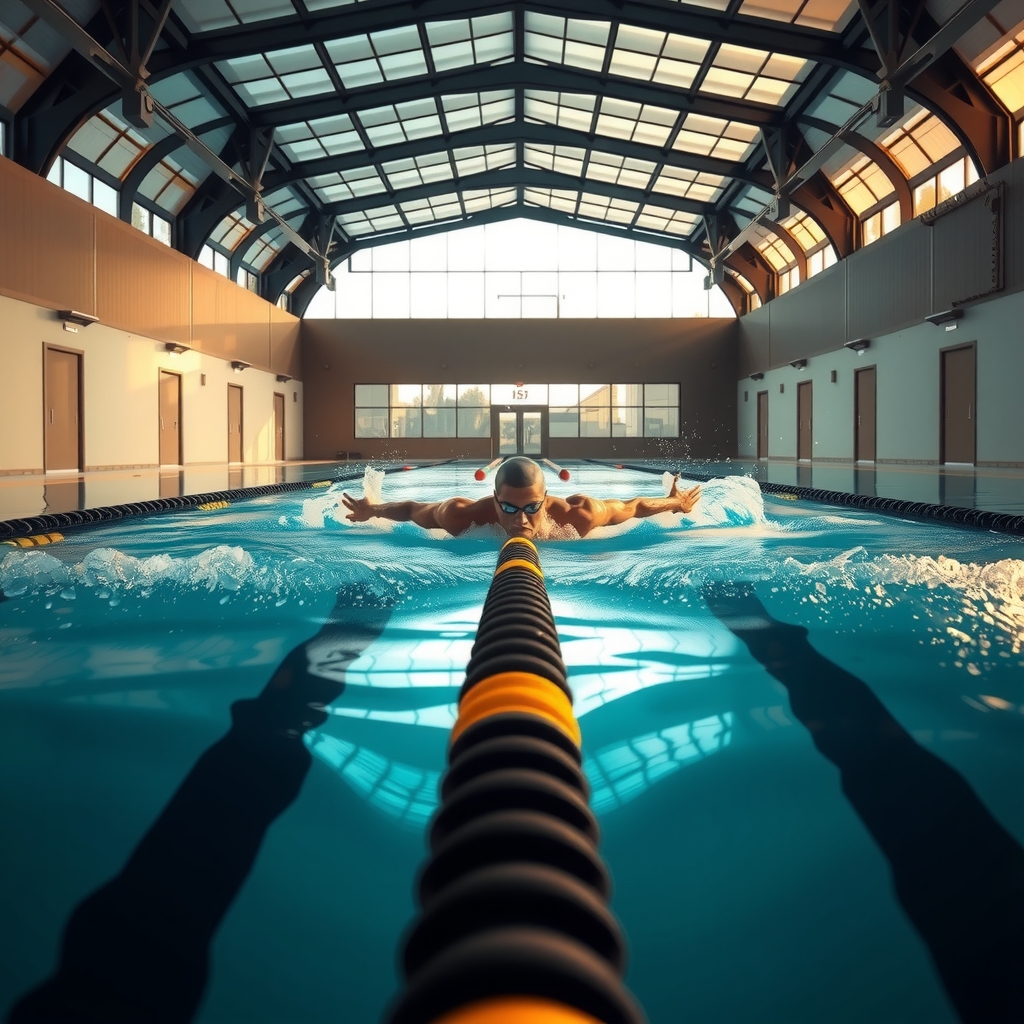
Pool Drills & Stroke Technique
Phelps' butterfly technique is biomechanically extraordinary. His dolphin kick generates minimal drag while his catch phase — anchoring the water early — produces maximum propulsion per stroke. Bowman built these mechanics through isolation drills long before adding volume.
- Underwater Dolphin Kick Sets 15m underwater off every wall at race pace; builds kick power and oxygen efficiency critical for butterfly turns.
- Broken Swims at Race Tempo E.g. 4×50m at 200m goal pace with :10 rest — trains muscle memory for exact race tempo without full-race fatigue.
- Catch-Up Drill (Freestyle) One arm reaches full extension before the other pulls — reinforces early vertical forearm and high-elbow catch.
- Single-Arm Butterfly Isolates the pull pattern on each arm individually; removes the symmetry crutch and exposes technical weaknesses.
- Negative-Split Repeats Second half of every interval must be faster than first — trains pacing discipline and rear-loaded race strategy.
- IM Transition Drills Fly-to-back and breaststroke-to-freestyle transition sets at competition pace to lock in the most-lost seconds of a race.
Out of the Water
Dryland Conditioning
Phelps logged 6–8 hours of dryland work weekly, structured to build swimming-specific strength — not gym aesthetics. The priority: rotational core power, shoulder stability, hip-flexor strength for the dolphin kick, and lower-limb explosiveness for starts and turns. How recovery fits between sessions →
Fuel System
The 10,000-Calorie Diet
During heavy training periods, Phelps consumed an estimated 8,000–12,000 calories daily to fuel back-to-back sessions. This isn't mythology — it's thermodynamics. Swimming burns roughly 700–900 kcal/hr, meaning 7–9 hours of daily training demanded extreme caloric intake, heavily carbohydrate-loaded. Compare sport-by-sport nutrition protocols →
- 5:00 AM — Pre-SessionOatmeal, banana, energy gel, 500ml sports drink
- 7:30 AM — Post AM Session3 fried egg sandwiches, 5-egg omelette, whole-grain toast, grits, 3 chocolate chip pancakes, French toast
- 10:00 AM — Mid-MorningProtein shake, fruit, peanut butter sandwich
- 12:30 PM — Lunch1lb pasta, whole pizza, energy drinks, sports drinks
- 3:00 PM — Pre-PM SessionRice, chicken, steamed veg, carb gel
- 6:00 PM — Post PM SessionProtein shake, recovery drink with electrolytes
- 7:30 PM — DinnerLarge pasta dish or rice-heavy meal, lean protein, vegetables, bread
- 9:00 PM — Night SnackCereal with milk, casein protein shake, banana

Beyond the Pool
Mental Health & Recovery
After retiring in 2012 and returning for Rio 2016, Phelps publicly opened up about severe depression, anxiety, and suicidal thoughts — a watershed moment for athlete mental health advocacy. He credited therapy and structured mental skills work as critical to his 2016 comeback. His transparency changed the conversation around elite sport psychology globally.
"After the 2012 Olympics I didn't want to be alive. Seeking help was the best decision I ever made."
— Michael Phelps, Today Show interviewYour Turn
Train Like The Greatest Olympian
You won't swim 80,000 metres this week — but you can adopt Phelps' core principles: relentless volume with technical precision, sport-specific strength, strategic nutrition, and honest mental skills work. The system scales.