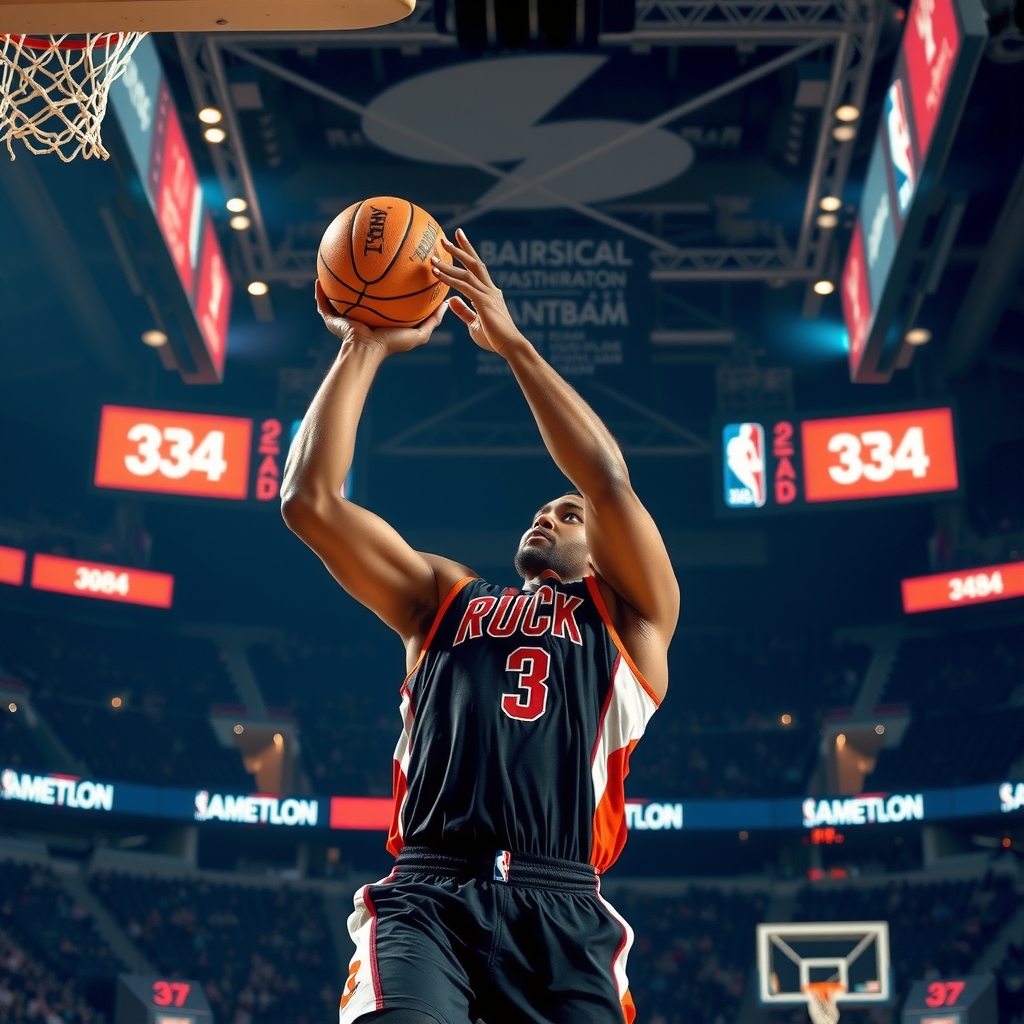
Kevin Durant
At 6'10" with guard skills, KD's training isn't just about conditioning — it's about mastering the impossible skill-length combination that changed basketball's definition of unstoppable.
Athlete Profile
Bio & Career Stats
Kevin Wayne Durant, born September 29, 1988 in Washington D.C., entered the NBA as the second overall pick in 2007. Standing 6'10" with a reported wingspan exceeding 7'5", he's built like a power forward yet moves with the footwork and shot mechanics of an elite shooting guard. Two NBA championships, two Finals MVPs, an MVP award, and 13 All-Star selections later — the analytics confirm what the eye test always said: KD is an all-time anomaly.
His college game at Texas under Rick Barnes focused intensely on skill repetition and post-footwork, setting patterns that persisted into a 17-year pro career. Read more on how body type shapes training approaches at our movement patterns breakdown.
Training Philosophy
The Slim Reaper Method
KD's training is built around one core principle: exploit every inch of the height advantage by attaching guard-level skill to it. Traditional big men train power and post. Durant trains release points, footwork precision, and the guard drills that a 6'10" frame makes virtually indefensible.
Long-time trainer Clint Parks (and later personal coaches) structured KD's off-seasons around two-a-day sessions — morning skill work (shooting, footwork, ballhandling) and afternoon athleticism (speed, lateral quickness, strength). The ratio matters: 60% skill, 40% conditioning.
Compare this to how LeBron's training philosophy prioritizes physical conditioning as the base — KD inverts the pyramid, treating skill mastery as the load-bearing wall. Both approaches are covered in our research behind the reps section.
Shooting Mechanics
Volume, Form & The Unguardable Release
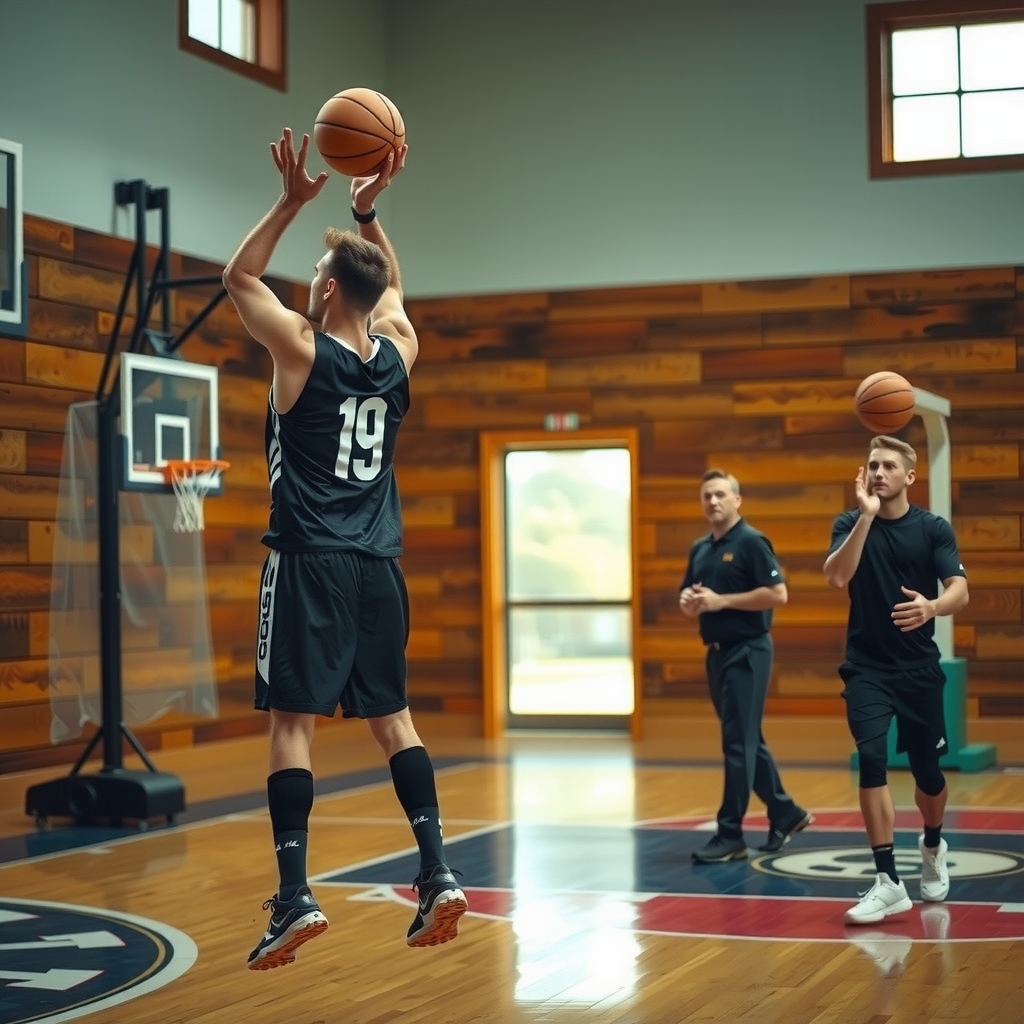
Durant's jump shot is considered one of the most mechanically sound in NBA history. Key characteristics: minimal wind-up, straight-line delivery, and a release at the apex of a jump that his extreme height makes nearly impossible to contest. His form is studied in detail at coaching clinics worldwide.
Research on deliberate practice shows that high-quality repetitions with feedback trump raw volume — KD reportedly works with assistants who chart every miss by zone, turning each session into a data-driven feedback loop. For comparison, see how Stephen Curry's shooting mechanics differ — quicker release, less height dependency.
Chart based on publicly available NBA career statistics. PPP = points per possession estimates from tracking data.
Drill Breakdown
Length-and-Skill Combination Drills
The following drills reflect the documented training approaches reported by KD's training team and basketball development coaches who specialize in wing-forward skill development. They're designed to leverage unusual length with refined guard movement. Compare with the Greek Freak's approach — which prioritizes athleticism-before-skill — for a contrasting philosophy.
Explore how weekly training structures for NBA players are built to accommodate this kind of skill-heavy volume.
Strength & Mobility
Building A Lean Machine
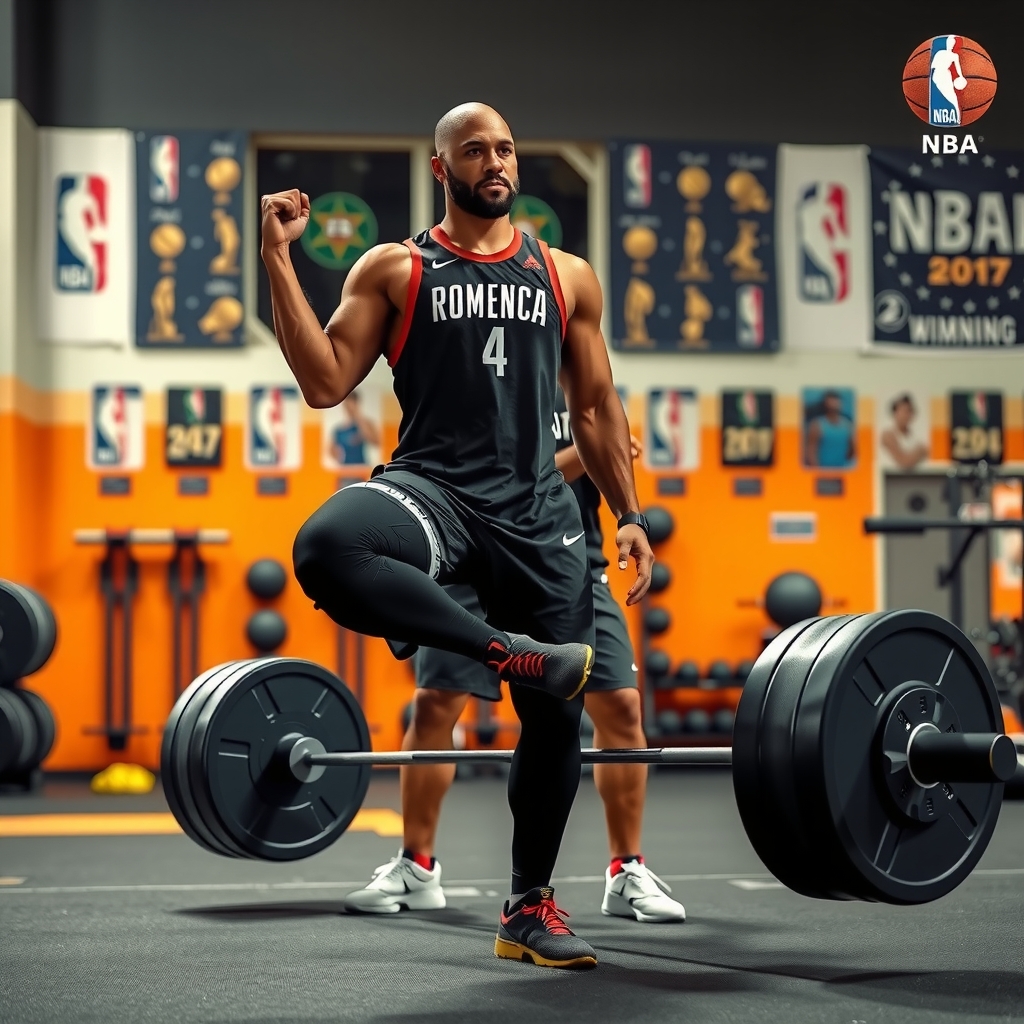
KD's frame — extraordinarily long, low body fat — required a very specific strength approach. Early in his career, critics questioned his durability. His training response: tendon and joint resilience over maximum muscle mass.
Key pillars of his strength programming:
- Single-leg strength — Bulgarian split squats, single-leg RDLs to stabilize long limbs under load
- Lateral hip strength — Monster walks, hip abduction machine work to protect ACL/Achilles chain
- Core anti-rotation — Pallof press variations, which support his long spine during post contact
- Band-resisted shooting — Light resistance bands around the waist during shot-release drills to build shot-creating strength
After his 2019 Achilles rupture, KD's recovery emphasized eccentric loading — a method explained in depth at our eccentric loading feature.
Flexibility & Movement
Mobility for the Long Frame
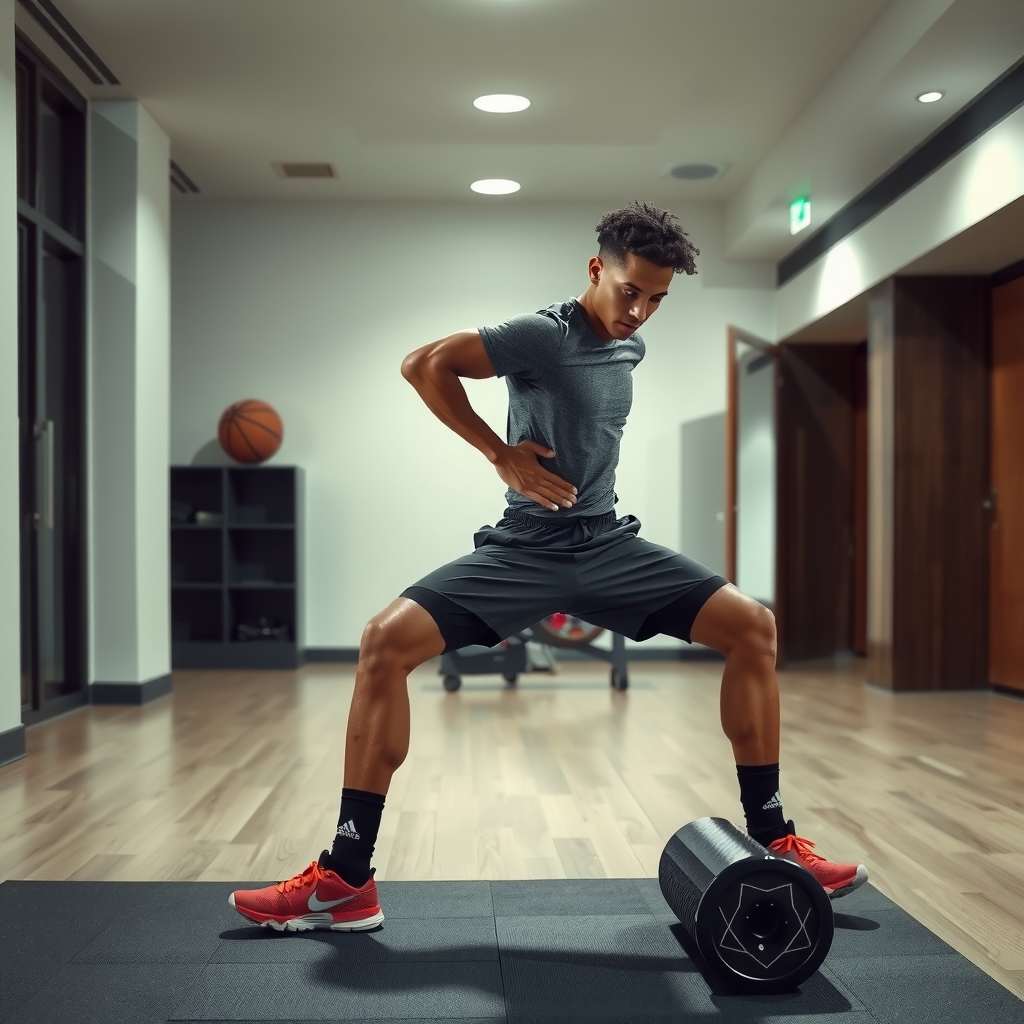
Long limbs create longer lever arms — which generates more power, but also more stress on joints. KD's reported mobility work runs 30–45 minutes daily, blending yoga-influenced stretching with functional movement patterns. This mirrors how Tom Brady's pliability-first approach treats flexibility not as an afterthought but as the foundation.
Core mobility targets for KD's frame:
- Thoracic spine rotation — essential for his shooting twist and defensive reach
- Hip flexor and glute lengthening — prevents anterior pelvic tilt under fatigue
- Ankle dorsiflexion work — critical post-Achilles recovery, supports his deep-knee-bend explosiveness
- Wrist and forearm mobility — protects his shooting hand's follow-through mechanics
See full recovery-as-training protocols for NBA-level mobility programs.
The Mental Game
Built In The Fire
No NBA player in the analytics era has faced more public scrutiny around their "competitive spirit" — the criticism of the Golden State decision, the Achilles rupture in Game 5, the Brooklyn era, every chapter dissected in real time. What's documented: KD keeps training. His mental resilience methodology, described in various interviews, includes specific practices for returning focus after adversity.
Compare with the mental systems of Serena Williams' pre-match visualization and Kobe Bryant's psychological preparation — three different profiles of elite mental toughness.
The mental conditioning layer is explored across our 6th gear: your mind training section. See also the athlete quotes that inspired millions.
Train Like
The Slim Reaper
KD's blueprint proves that skill mastery, not just physicality, is the ceiling-raiser. Study the method. Build the repetitions. Own the release point nobody can contest.