
Neymar Jr
Samba King
Born on the streets of Mogi das Cruzes, built into one of football's most electric forces — here's how Neymar trains flair, speed, and resilience.
Athlete Bio & Career
The Making Of A Magician
Neymar da Silva Santos Júnior emerged from Santos FC as a teenager whose skill was so extraordinary it seemed almost theatrical. By the time he moved to Barcelona in 2013, he had cemented himself alongside Messi and Suárez in arguably the greatest front three in football history. His 2017 move to PSG for €222 million signalled a new era — and a new set of pressures that tested his body and mentality like never before.
Despite injury interruptions, Neymar's contributions to Brazilian football culture and global flair play remain unmatched. His training model blends elite European conditioning with the instinctive creativity only forged on the futsal courts of Brazil's back streets. Explore related athletes across our full athlete roster or see how his style compares to teammates in our Sports Hub.
Club Career Highlights
Santos FC prodigy → FC Barcelona (2013–2017) → Paris Saint-Germain (2017–2023) → Al-Hilal (2023–). Won La Liga, Copa del Rey, and the 2015 UEFA Champions League treble with Barça.
International Record
Brazil's all-time leading scorer, surpassing Pelé's record. Multiple Copa América appearances, 2016 Olympic Gold in Rio — a night that cemented his national icon status.
Street Soccer Roots & Training Philosophy
The Favela Blueprint
Before the Nou Camp, before PSG, before the global headlines — there were the cramped futsal courts of Mogi das Cruzes. Neymar's father coached him from childhood, prioritising touch, creativity, and a fearlessness with the ball that only comes from environments where you must survive a challenge to keep possession.
This philosophy never left him. Even at elite European clubs, Neymar's conditioning coaches have preserved space for technical expression within structured sessions — honouring the belief that an athlete's natural intelligence cannot be drilled out of them. Our piece on the science of elite training explores how this street-to-stadium transfer is increasingly validated by sports science.
- Futsal Foundations: small-space, high-touch sessions replicated in training to maintain the rapid decision-making and close-control reflexes built on Brazilian courts.
- Freedom Within Structure: elite coaches preserve zones of creative expression rather than over-coaching natural instinct — producing unpredictability that defenders cannot model.
- Jogo Bonito Mindset: training is play — joy and pressure coexist, mirroring match conditions without stripping the flair that defines his game.
- Father as First Coach: early specialisation paired with emotional investment from family creates identity-level commitment to the craft — a concept supported across our mental training research.
Dribbling & Skills Mastery
The Art Of The Dribble

Cone Slalom Acceleration
8–12 cones set 60cm apart. Dribble through at max pace leading with weak foot on odd passes, strong foot on even — builds ambidextrous close control and change-of-direction speed simultaneously.
Futsal 1v1 Rondos
Tight 6×6m grid with one defender and two attackers rotating. High ball contacts per minute, forcing rapid decisions and replicating the reactive creativity from Brazilian street play.
Elastico & Step-Over Circuits
Isolated skill repetition of signature moves — elastico, step-over, rainbow — performed at low intensity for motor encoding, then replicated under passive defensive pressure.
Wall Rebounds — Touch Variation
5-minute sets against a rebound wall using inside, outside, and instep touches, varying pace and trajectory to build the subtlety of first-touch control under unpredictable ball flight.
Skill mastery of this type reflects deliberate practice over repetition — a principle we break down on the home page and that underpins every great technical footballer's development.
Explosive Speed Conditioning
First 10 Metres Win Games
Neymar's speed is deceptive — not a sprinter's linear burst, but explosive multidirectional acceleration that creates separation in tight spaces. His conditioning work prioritises reactive agility and first-step quickness over pure top-end pace.
His programme incorporates loaded resisted sprints, plyometric lateral bounds, and reactive agility gate drills that mirror the unpredictable chaos of match play. Compare the principles to Usain Bolt's acceleration protocol — different sport, same neuromuscular principles.

Injury Prevention & Rehab
Rebuilt Three Times
Three significant injuries — a broken metatarsal in 2014, a ruptured ligament in 2018, and a torn ACL in 2023 — have defined and interrupted Neymar's career. Each recovery has been documented with striking attention to detail, revealing a rehabilitation philosophy that goes far beyond physical repair.
His approach mirrors the recovery-as-training philosophy outlined in our training plan deep-dive — treating rehab as a constructive phase rather than absence. Proprioceptive work, water-based loading, and psychological coaching all feature prominently.
- Weeks 1–3: Acute Phase Complete rest, cryotherapy, anti-inflammatory nutrition protocol, passive range-of-motion work to prevent tissue tightening.
- Weeks 4–8: Load Reintroduction Aquatic treadmill running, isometric strengthening, neuromuscular electrical stimulation to maintain motor patterns without stress on the repair site.
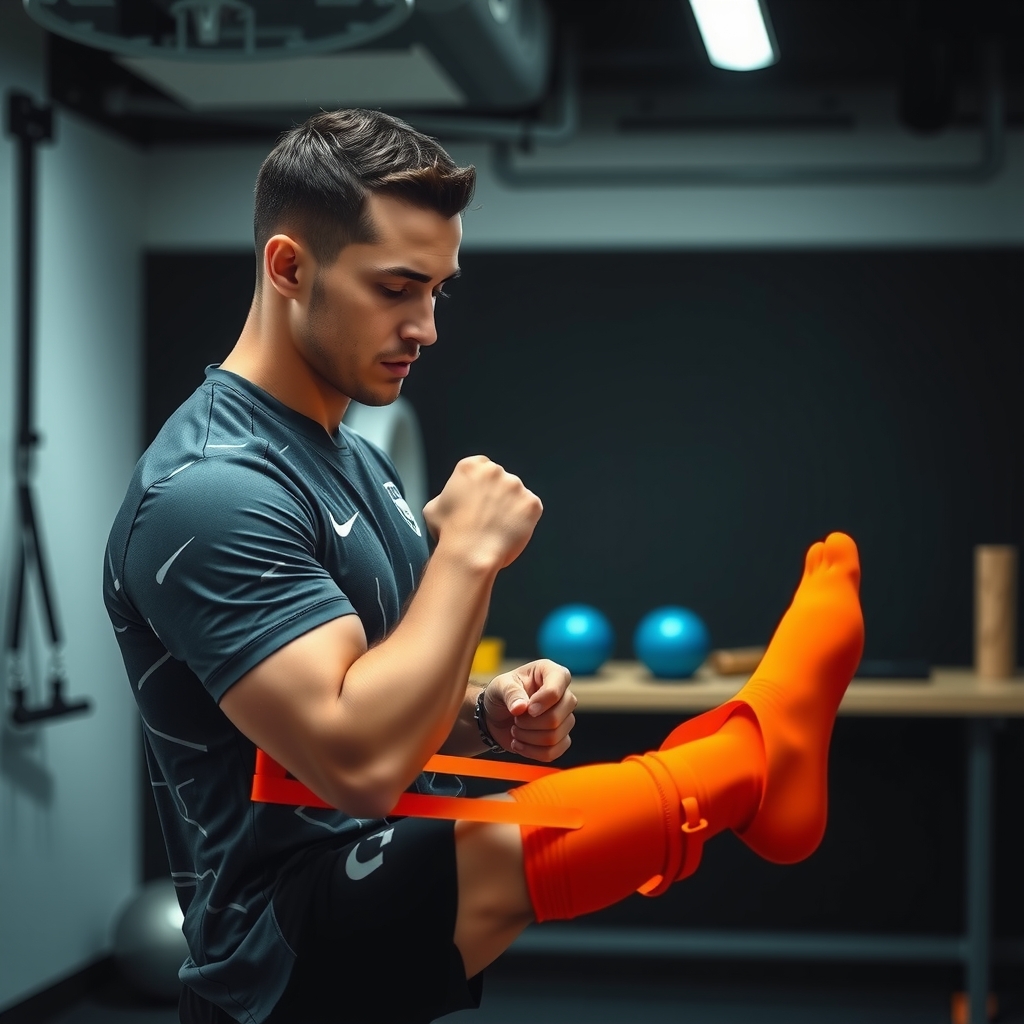
- Weeks 9–16: Functional Rebuilding Proprioception boards, band-resisted single-leg work, light agility ladders, progressive ball contact reintroduction — always alongside a sports psychologist.
- Weeks 17+: Return-to-Play Protocol Full training integration, elevated contact drills, match simulation sessions, GPS-monitored load management until full clearance metrics are met.
Nutrition & Lifestyle
Fuelling Flair
At 68kg, Neymar needs to sustain explosive output over 90-minute matches without the bulk that would compromise his agility. His nutrition plan is lean and reactive — calibrated around training load rather than fixed macros, with anti-inflammatory foods a daily priority given his injury history.
Pre-Training
Complex carbohydrates 2–3 hours before sessions: oats, sweet potato, brown rice with lean protein. Hydration begins 90 minutes before warm-up. No heavy fats within 2 hours.
Intra-Session
Electrolyte drinks during sessions over 60 minutes. Banana or date-based energy bars at half-time in matches. Glycogen maintenance without digestive loading.
Recovery Window
20g whey or plant protein within 30 minutes post-training. Tart cherry juice reported to reduce muscle soreness. Omega-3 rich fish (sardines, salmon) at evening meals.
Lifestyle & Sleep
Known for enjoying life — Neymar's clubs manage his lifestyle schedule carefully around match calendars. 8–9 hours of sleep targeted during congested fixture periods, with deliberate relaxation built into recovery days.
For the broader principles behind fuelling elite football, see how Cristiano Ronaldo structures his nutrition — a contrasting approach that also underscores carbohydrate timing. Our training plan nutrition section covers the research.
Train Like The Samba King
Take the creativity, the pace, and the resilience from Neymar's career and put it into your own game. Explore full training plans and athlete comparisons built for every level.