Roger
Federer
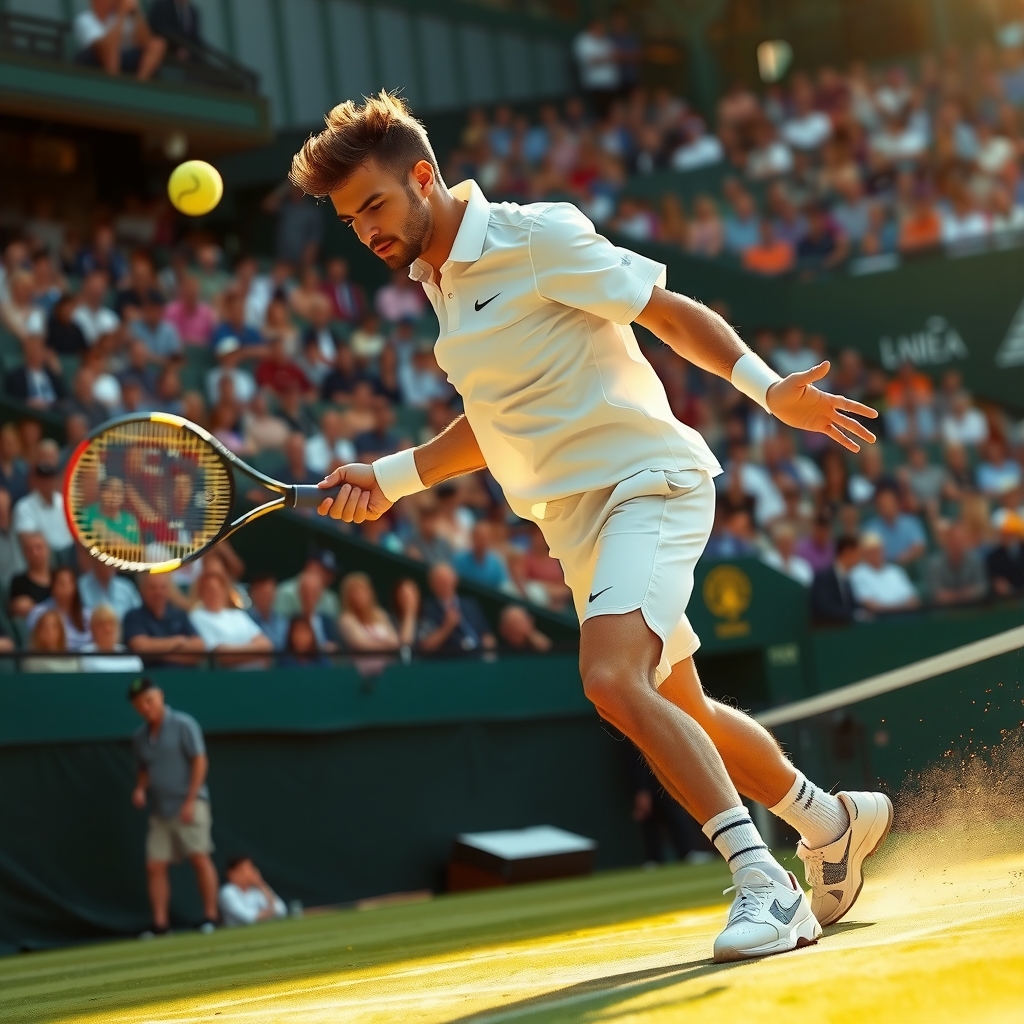
Twenty Grand Slams. Nearly a quarter-century at the top. Federer didn't just play tennis — he elevated it into art form, built on a foundation of obsessive footwork, technical precision, and a recovery mindset decades ahead of its time.
Athlete Bio & Grand Slams
Born in Basel, Switzerland in 1981, Federer turned professional at 17 and spent more than two decades reshaping what tennis could look like. His game was a masterclass in efficiency — minimal wasted energy, maximum effect.
The Résumé
- 20 Grand Slam singles titles (2003–2022)
- 8 Wimbledon titles — the all-time men's record
- 6 Australian Open, 5 US Open, 1 Roland Garros
- Olympic gold (doubles 2008), silver (singles 2012)
- 103 ATP singles titles across 24 seasons
- Davis Cup winner with Switzerland (2014)
What Made Him Different
Coaches point to three things: exceptional early racket preparation, a natural feel for geometry on court, and an almost singular commitment to movement economy. He rarely appeared rushed — because he had already arrived where the ball was going.
Training Philosophy
Federer's approach was never about volume for its own sake. His long-time coach Peter Carter instilled a belief in mastery over repetition — practice the right things, not just more things. That philosophy evolved under Severin Lüthi into a system that prized match-readiness and injury prevention as equal priorities to skill development.
Deliberate Practice
Federer drilled specific patterns with specific intentions — not random hitting. Every basket of balls had a tactical purpose. See how deliberate practice beats reps in our science breakdown.
Efficiency Over Effort
His hallmark was making difficult shots look effortless. Training focused on eliminating excess motion — a swing that travels further than necessary is a swing that fatigues faster.
Mental Architecture
Federer trained pattern recognition relentlessly — reading opponent body language before ball contact. This cognitive edge complemented the physical. Compare this with Curry's mental approach to shot-making under pressure.
Season Architecture
He was famous for selective scheduling — skipping clay events to protect his body for grass. Strategic rest is itself a training method. Our year-round training cycle guide explains why.
Adaptability
Post-2016 knee surgery, Federer overhauled his game — adopting a more aggressive baseline position, updated grip, and altered footwork to protect joints. Reinvention at 35 led to three more majors.
Team Investment
A physio, fitness coach, tactical coach, and mental performance advisor — Federer treated his support staff as long-term partners, not commodities. See how Brady's TB12 method shares this team-first philosophy.
Footwork & Court Movement
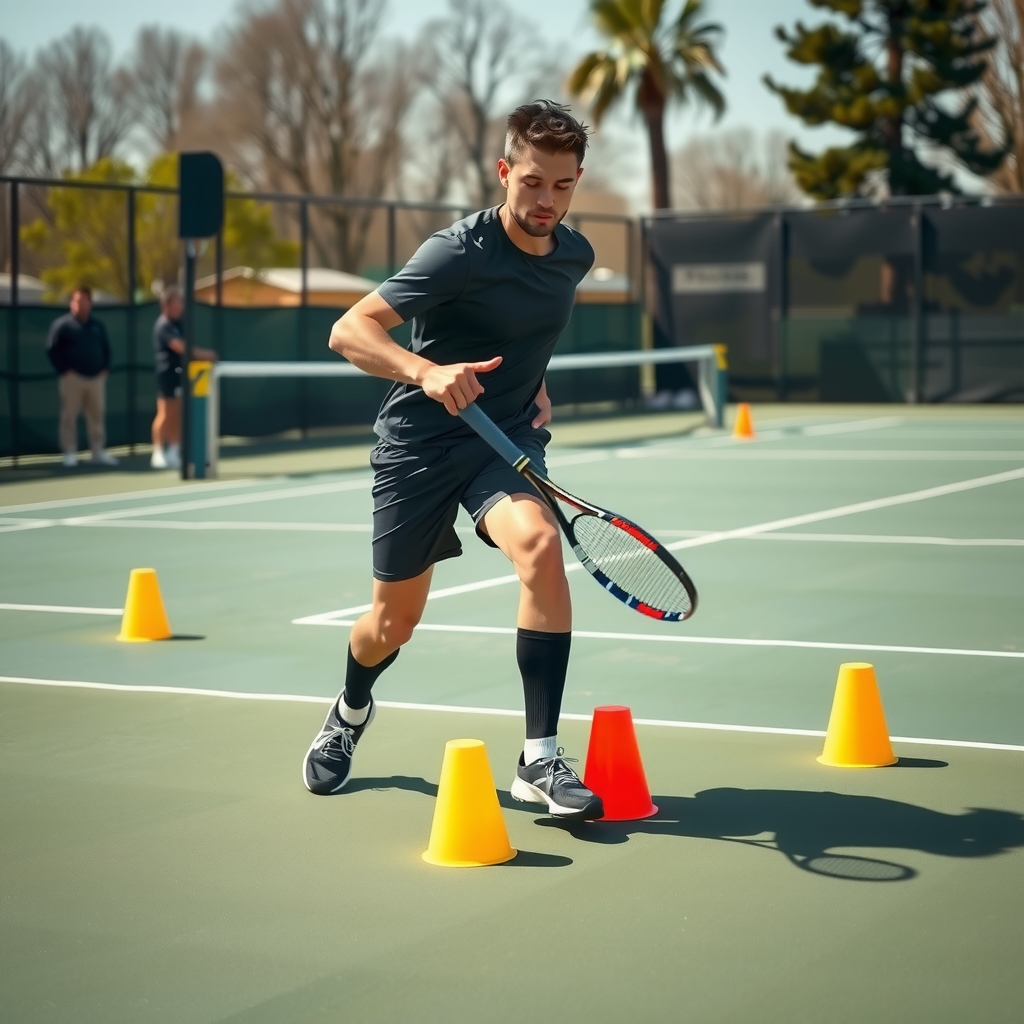
Analysts have called Federer's movement the closest thing to ballet in professional sport. His split-step timing, explosive first step, and recovery patterns were trained with the same rigor as stroke mechanics.
Split-Step Synchronisation
The split-step — a small hop as the opponent strikes — must land precisely at contact. Federer trained this to become automatic, repeating it 500+ times per session until it was reflex, not thought.
Shadow Footwork Circuits
Without a ball, Federer rehearsed every movement pattern on court — forehand, backhand, net approach, wide ball recovery — building neural pathways for muscle memory.
Cone Agility Ladders
Lateral shuffle-to-crossover combinations replicating match scenarios. Emphasis on the crossover step — Federer's signature move to cover wide balls without opening his body.
Recovery Position Drilling
After every drill rep, he returned to the T — the optimal recovery point. This habit, drilled until automatic, eliminated the positional errors that cost lesser players rallies.
Explosive Short-Sprint Intervals
5-metre bursts from split-step position, mimicking the actual distances covered in a rally. Pairs well with the sprint-first conditioning model detailed in our science hub.
Serve & Stroke Drills
Federer's serve was a weapon disguised as elegance — and his groundstrokes combined disguise, angle, and depth in a way opponents never fully decoded. Here's how those skills were built.
Trophy Position Isolation
Federer broke his serve into phases, drilling the trophy position — both arms extended, body coiled — separately before integrating. This isolated the kinetic chain from toss-hand to racket-arm, building explosive upward drive.
Toss Consistency Blocks
Toss practice: 50 repetitions daily with no ball struck — just a perfect toss caught at its apex. A consistent toss removes the single biggest variable in serve mechanics. Simple. Unglamorous. Essential.
Windshield Wiper Finish
His forehand's signature topspin came from a dramatic low-to-high, inside-out wrist snap at contact. Trained with wall-ball repetitions at short distance before extending to full court, building the feel before the power.
One-Hander Slice Control
Federer's one-handed backhand slice was a neutraliser and weapon in one. He trained it extensively on low balls — a weakness early in his career — drilling the shoulder-turn preparation and firm wrist through contact.
Volley Reaction Feeds
Coach feeds rapid-fire balls from close range — volley, volley, overhead, repeat. Trained hand speed, shoulder stability, and court positioning simultaneously. Net proficiency was a deliberate career differentiator.
Pattern Repetition Sets
Federer rehearsed specific 3–4 shot patterns — serve wide, forehand down the line, volley — until they were automatic responses to opponent positioning. Tactical play became instinctive, not calculated under pressure. See how Serena's serve training compares.
Physical Conditioning
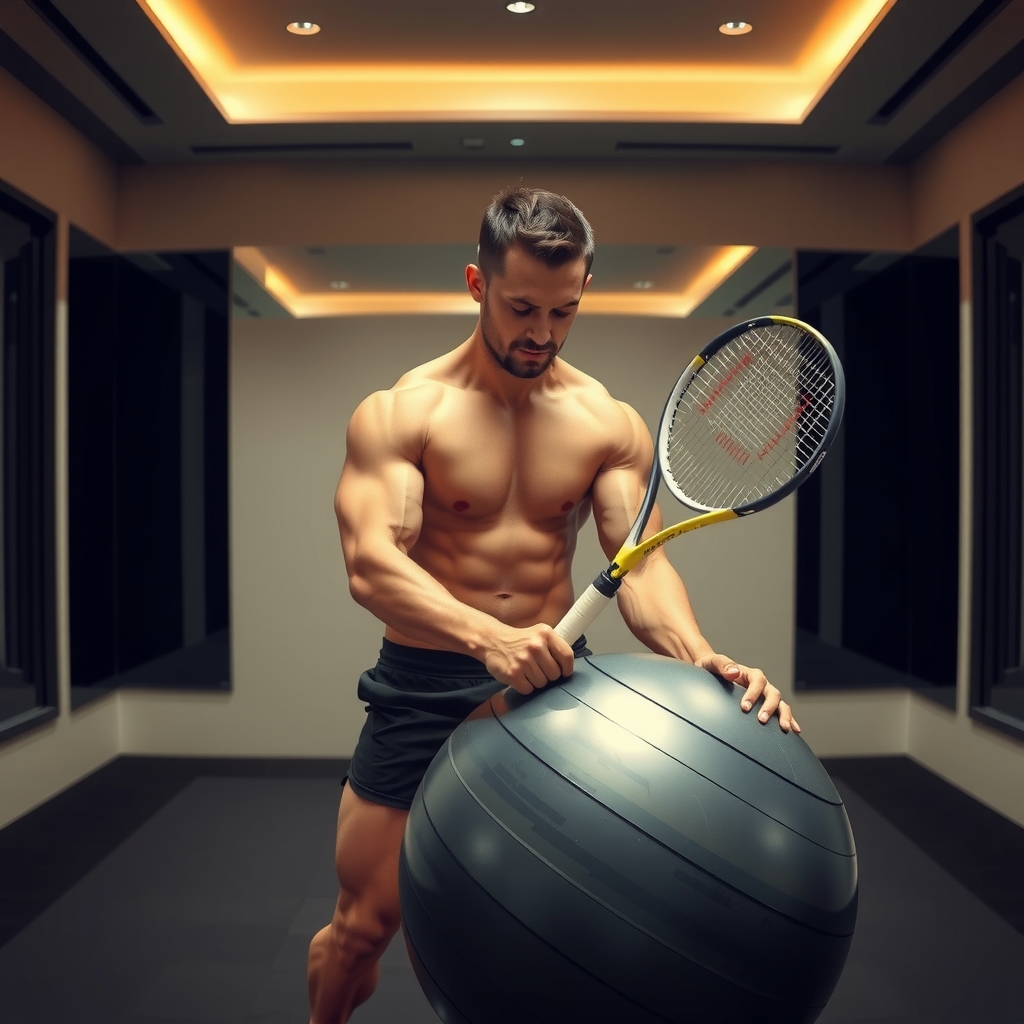
Despite his effortless aesthetic, Federer's physical preparation was meticulous. Fitness trainer Pierre Paganini — who worked with him for over two decades — built a programme centred on court-specific athleticism, not gym aesthetics.
| Day | Focus |
|---|---|
| Monday | On-court drills (footwork + patterns) + core stability |
| Tuesday | Strength training: lower body — single-leg squats, glute work, calf raises |
| Wednesday | Long practice session (match simulation) + active mobility |
| Thursday | Upper body + rotational power — cable rows, medicine ball throws |
| Friday | Aerobic base work — 40 min steady-state + court sprints |
| Saturday | Match play or high-intensity drill set + physio session |
| Sunday | Recovery: light movement, swimming, stretching |
Paganini prioritised single-leg stability, core anti-rotation, and lateral hip strength — the often invisible foundations of Federer's on-court movement. Our weekly training breakdown applies similar principles.
Longevity & Recovery Secrets
Federer won his 20th Slam at 36. He won multiple titles after 35. His ability to sustain elite performance across four decades of play was not luck — it was engineered. Here's what we know about his recovery system.

Sleep as Non-Negotiable
Federer famously targeted 10–12 hours of sleep per night, considering it his single most important recovery tool. Sleep is where tissues rebuild and patterns consolidate — our sleep science deep-dive validates exactly this.
Cold & Contrast Therapy
Ice baths and contrast (cold/warm) hydrotherapy after matches reduced inflammation and accelerated soft tissue recovery — a cornerstone of his between-match turnaround, especially during two-week Slam events.
Daily Physio Access
Not just for injuries — Federer received daily soft tissue work, joint mobilisation, and preventive treatment throughout tournaments. Treating physio as maintenance, not repair, extended his career by years.
Anti-Inflammatory Nutrition
A diet rich in vegetables, quality protein, and healthy fats — while limiting processed foods and alcohol. Not extreme, but consistent. Compare Brady's stricter anti-inflammatory protocol for contrast.
Strategic Schedule Management
Post-30, Federer reduced his annual match count, skipping entire clay seasons to protect joints. Fewer matches preserved his body for the Slams that mattered most. Our recovery is training section explains the science.
Surgical Reinvention
Two knee surgeries in 2020 — and rather than rushing back, Federer took over a year out. The patience to fully heal, then rebuild, is itself a longevity skill. Compare this willingness to start over with Kobe Bryant's Achilles comeback philosophy.
Ready to Train
Like The Maestro?
Federer's brilliance was built in practice — one drill, one movement, one recovery session at a time. Start building your own foundation today.