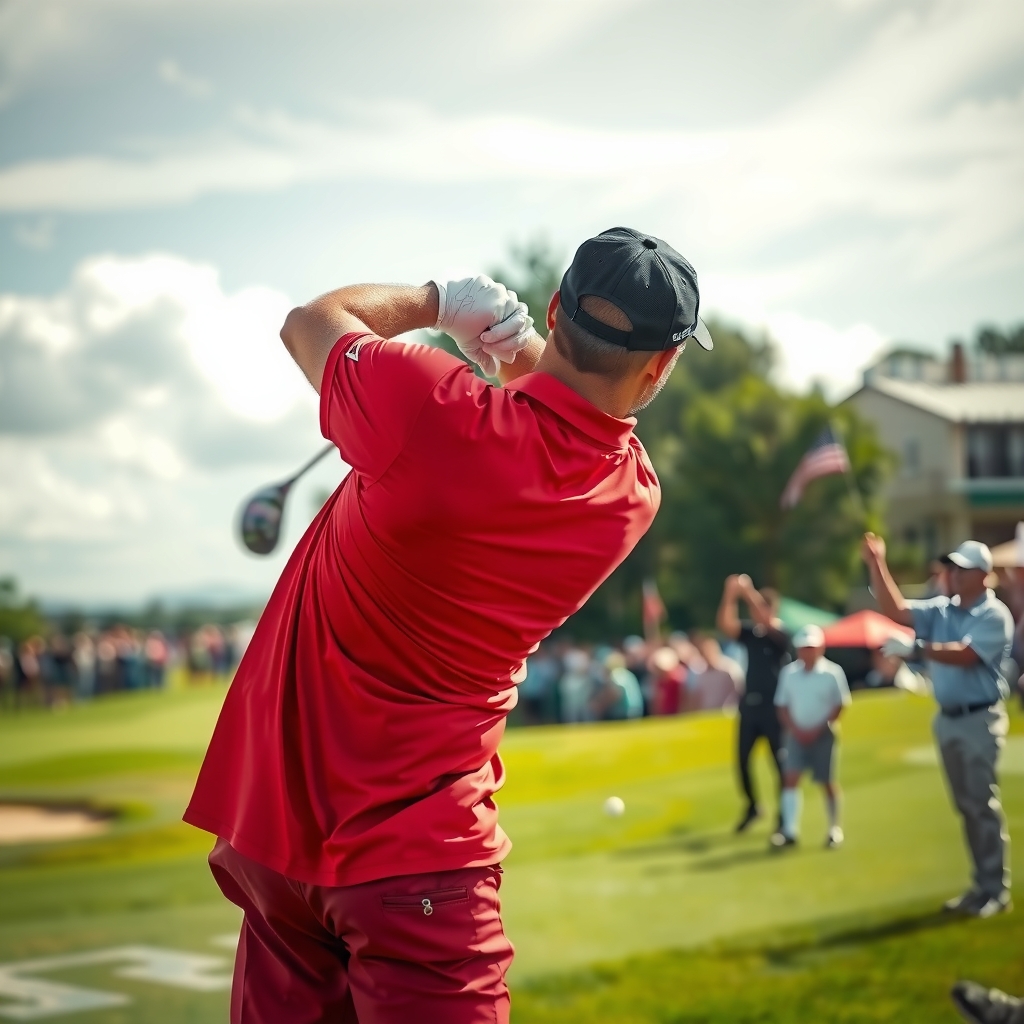
TIGER WOODS
The man who turned golf into an athletic sport. 15 majors. A body built like a linebacker. A mind forged in fire.
Athlete Bio & Major Wins
Eldrick "Tiger" Woods (born December 30, 1975) is widely regarded as the greatest golfer in history. Starting at age 2 under his father Earl's guidance, Tiger turned professional at 20 and immediately rewrote every expectation the sport had of a top player — not just in skill, but in physique, preparation, and drive.
Before Tiger, golfers were not athletes in the traditional sense. He changed all of that. He hired personal trainers, logged weight room sessions that NFL players would respect, and practiced a mental discipline borrowed from Buddhism and Navy SEAL culture. The result: a dominant era that produced records that may never be broken.
For more on how elite athletes across all sports approach training, visit The Athletes Hub or browse year-round training cycles to see how Tiger's periodization compares.
- 1997 Masters — 12-shot victory, youngest ever Masters champion
- 2000 US Open — Won by 15 strokes, historic margin
- 2000 Open Championship — 8-shot victory at St Andrews
- 2000–2001 "Tiger Slam" — Held all 4 majors simultaneously
- 2005 Masters — Legendary chip-in on 16th hole
- 2008 US Open — Won on a broken leg and torn ACL
- 2019 Masters — Comeback of the century, 11 years after last major
- 82 PGA Tour Wins — All-time record, tied with Sam Snead
How Tiger Changed Golf Fitness
Before Tiger arrived on the PGA Tour in 1996, a player lifting weights was considered eccentric. Golf was a game of finesse, not force. Tiger proved it was both — and that you couldn't have one without the other. His influence reshaped how every professional on tour thought about their body. Read about how movement patterns differ by sport to understand why golf demands such a unique athletic profile.
Weight Room Culture
Tiger was the first elite golfer to commit to serious resistance training year-round. His early trainer Keith Kleven had him lifting heavy before it was accepted practice in golf.
Rotational Power
He trained specifically for swing speed — building core and hip rotational strength that translated directly into ball-striking distance and control that no peer could match.
Flexibility as Priority
Daily yoga and stretching weren't optional extras. Tiger treated mobility as a performance multiplier, enabling deeper shoulder turns and wider swing arcs.
Cardiovascular Base
He ran 3–5 miles most mornings. A golf round is 5+ miles of walking under pressure — Tiger built his engine to be sharp from hole 1 to 18.
Sport-Specific Training
Every drill was golf-adjacent. Cable rotations, medicine ball throws, single-leg deadlifts — all designed to carry directly into swing power and course stability.
Mental Conditioning
Tiger trained his mind as hard as his body. Pre-shot routines, visualization, emotional regulation — psychological discipline made the physical edge count under pressure.
Compare Tiger's approach to other sport-changers in the Hall of Champions training philosophy breakdown.
Strength & Flexibility Routine

Tiger's training week was a carefully structured blend of heavy compound lifts, mobility work, and skill-specific conditioning. In his prime he trained twice a day: weights in the morning, practice rounds in the afternoon. This level of volume mirrors the weekly structures of other elite athletes.
The key principle: every exercise had to make him a better golfer. No bodybuilding for aesthetics — every rep was functional, sport-specific, and periodized to peak at majors.
| Day | Focus | Key Exercises | Why It Works For Golf |
|---|---|---|---|
| Monday | Lower Body Power | Trap bar deadlifts, Bulgarian split squats, Nordic hamstring curls | Builds drive leg stability and power transfer from ground to club |
| Tuesday | Rotational Core | Cable rotations, med ball rotational throws, Pallof press | Direct carry-over to swing speed and hip-shoulder separation |
| Wednesday | Upper Body + Flexibility | Rows, face pulls, thoracic rotations, lat stretch sequence | Shoulder health and range of motion for full backswing |
| Thursday | Cardiovascular + Yoga | 5-mile run, 45-min yoga session, hip flexor routine | Endurance for 72-hole tournaments plus injury prevention |
| Friday | Full Body Athletic | Single-leg RDLs, cable chops, explosive step-ups, plank series | Multi-planar stability replicating the demands of course terrain |
| Weekend | Active Recovery | Swimming, light stretching, putting and chipping practice | Maintain motor patterns, reduce accumulated fatigue |
Want to see how this compares to another legend's strength approach? Check out Serena Williams in the weight room or LeBron's weekly workout breakdown.
Swing Mechanics Drills
Tiger rebuilt his swing multiple times throughout his career — a feat of physical and psychological courage almost unimaginable at the elite level. Each rebuild was guided by meticulous drill work. These are the core mechanics he and his coaches refined across decades. For a deeper look at deliberate practice principles, see our home page breakdown.
Foot-On-Club Drill
Place a club along the target line at your feet to train consistent alignment. Tiger hit hundreds of balls per session with alignment aids to make proper setup automatic under pressure.
Impact Bag Strikes
Drive into a foam impact bag to groove the feeling of a powerful, compressed impact position. Develops the hand position and body rotation that generates maximum energy transfer at contact.
Slow-Motion Swing Recording
Film every swing, slow it to 25% speed, and analyze checkpoint positions: takeaway, top of backswing, impact, and follow-through. Tiger reviewed film obsessively with his coaches.
Short-Game 100-Ball Drill
100 chips to a single target from 30 yards. Count how many land within a 5-foot circle. Tiger held himself to impossibly high standards on short-game proximity to build tournament precision.
One-Armed Swing Drill
Swing with just the trail arm, then just the lead arm. Isolates each side's role in the swing and builds the independent strength needed for a consistent, repeatable motion under fatigue.
Pressure Putt Ladder
Start 3 feet from the hole. Must make 10 in a row before moving to 5 feet, then 8 feet. Miss and restart. Tiger used this drill to simulate the emotional stakes of tournament conditions daily.
Compare this to Steph Curry's shooting drills — same principle, different sport: deliberate, pressure-simulated repetition.
Mental Game Strategy

Tiger's mother introduced him to Buddhism at a young age. He credits his ability to blank out distractions — galleries, cameras, rivals — to meditative principles that became woven into his competitive identity. His mental game was not accidental. It was trained, structured, and as deliberate as every iron swing. For broader context on mental conditioning as training, see our training deep-dive.
The 18-Second Pre-Shot Routine
Every shot began the same way: stand behind the ball, visualize the exact flight path, pick a specific target, commit fully, then execute without doubt. The routine created a tunnel of focus separating intent from action.
Red Light / Green Light System
Tiger used a mental traffic light: red = stop and reset if anxious or distracted, yellow = check alignment and commitment, green = pull the trigger only when fully locked in. No half-committed shots.
Visualization Before Every Round
He would walk the course mentally the night before — not the whole course, but every shot he expected to face in key moments. Detailed, sensory, emotional rehearsal of success.
Controlled Emotional Display
The fist pump was real but strategic — a release valve for genuine emotion that also served to intimidate competitors. Off camera, Tiger trained emotional neutrality. The intensity was genuine; the composure was practiced.
See how Serena Williams' mental conditioning parallels Tiger's approach — two different sports, one psychological framework.
Comeback & Resilience

No story in sports illustrates resilience like Tiger's. He didn't just win — he lost everything, rebuilt, and won again. Five knee surgeries, four back surgeries including a spinal fusion, a near-fatal car accident in 2021. Each time, the world wrote him off. Each time, he returned. His comeback is studied by sports scientists and psychologists as one of the most documented cases of elite athlete rehabilitation. For more on the most grueling training regimes in sports, see our Inspire page.
US Open on a broken leg. Competed — and won — the US Open at Torrey Pines on a stress-fractured tibia and a torn ACL. The most physically gutting victory in golf history.
The dark years. Multiple back surgeries, personal upheaval, and missed cuts. Ranked outside the top 1,000 in the world. Most observers believed his career was over.
Signs of life. Spinal fusion recovery complete. Second place at the PGA Championship. Galleries flooded back. The comeback narrative began in earnest.
The 2019 Masters. Donning the green jacket 11 years after his last major — a comeback widely called the greatest in sports history. The roar from Augusta National could be heard for miles.
Car accident. Single-vehicle crash resulted in severe leg injuries requiring emergency surgery. Doctors spoke of amputation. Tiger refused to accept any outcome but return.
The Masters, again. Returned to compete just 14 months after the accident, walking 72 holes on a reconstructed right leg. Finished 47th — but finished.
Tiger's resilience mirrors patterns you'll find across the Hall of Champions — great athletes are defined not by their peaks, but by their recoveries. Also explore Kobe Bryant's comeback philosophy.
Build Your Tiger Training Plan
You don't need to be turning pro. You need to train with purpose. Take Tiger's principles — discipline, sport-specific strength, mental clarity — and make them yours.